How the Vandeleurs and the Victims Lived
THE VANDELEURS
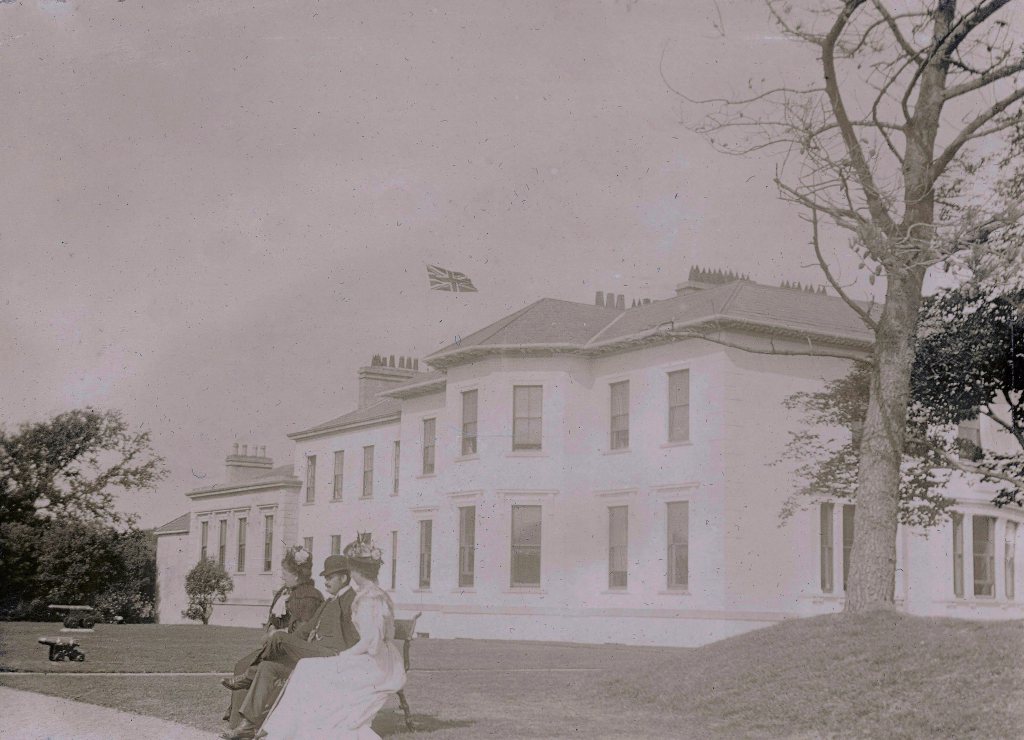
The Vandeleurs were an immensely wealthy family (see “The Vandeleurs” section) who enjoyed life in their “Big House” while evicting thousands into misery and death. The garden was walled – for protection not just from wild animals, but from the starving poor outside.
THE VICTIMS
Captain Kennedy was a British Army officer and colonial administrator. In 1847 he was appointed as Poor Law Inspector for the Kilrush Union. He was on the side of the Crown (and therefore the Vandeleurs) – nevertheless, even he found the actions of the Vandeleurs repugnant (see all available reports on Evictions in Kilrush page).
Eyewitness Account: Report of Captain Kennedy – March 16, 1848
“We admitted a considerable number of paupers, some of the most appalling cases of destitution I have witnessed. Most of these wretched individuals are traceable to recent evictions in the Union. When driven from their homes, they seek shelter in ditches or banks, living like animals until starvation or harsh weather forces them to the workhouse. Yesterday, three cart-loads of these individuals, unable to walk, were brought for admission—some with fever, others with dysentery, all suffering from lack of food.”
Eyewitness Account: Report of Captain Kennedy – April 6, 1848
“The destitution in degree and character are, I trust, unknown elsewhere; improvident, ignorant, thriftless parents, scarcely human in habits and intelligence, only present themselves with 9 or 10 skeleton children, when they themselves can no longer support the pangs of hunger, and their wretched offspring are beyond recovery.”
Eyewitness Account: Report of Captain Kennedy – June 27, 1848
“Many wretched dens lacked light or air, forcing me to light a piece of bog-fir to find the sick, while solid houses lay in ruins nearby. Regardless of reasons for the clearances, they bring immediate suffering that would alarm the proprietors if they saw it. Last week, about 60 more souls were left homeless on a small property, worsening the overcrowding in cabins and spreading disease.”
Eyewitness Account: Captain Kennedy to the Commissioners – July 5, 1848
“Twenty thousand, or one-fourth of the population, are now in receipt of daily food, either in or out of the workhouse. Disease has unfortunately kept pace with destitution, and the high mortality at one period since last November, in and out of the workhouse, was most distressing…destitution has been increased and its character fearfully aggravated by the system of wholesale evictions which has been adopted; that a fearful amount of disease and mortality has also resulted from the same causes, I cannot doubt. I have painful experience of it daily.
To make this understood, I may state in general terms, that about 900 houses, containing probably 4,000 occupants, have been levelled in this Union since last November. The wretchedness, ignorance, and helplessness of the poor on the western coast of this Union prevent them seeking a shelter elsewhere; and to use their own phrase, they “don’t know where to face;” they linger about the localities for weeks or months, burrowing behind the ditches, under a few broken rafters of their former dwelling, refusing to enter the workhouse till the parents are broken down and the children half starved, when they come into the workhouse to swell the mortality, one by one.“
Source: Clare Library
The people of the Kilrush Union suffered evictions from perfectly good houses (which were “tumbled” to render uninhabitable).
Eviction meant starvation at a time when there was a surplus of food.
Vandeleur was one of many landlords that oversaw this devastation across Ireland – many were bad but Vandeleur is considered one of the very worst. Britain’s official response even today is that it was a “humanitarian tragedy,” an “avoidable disaster” and more blah blah bullshit. This laissez-faire attitude can also be seen in the use of the Vandeleur name as a brand.
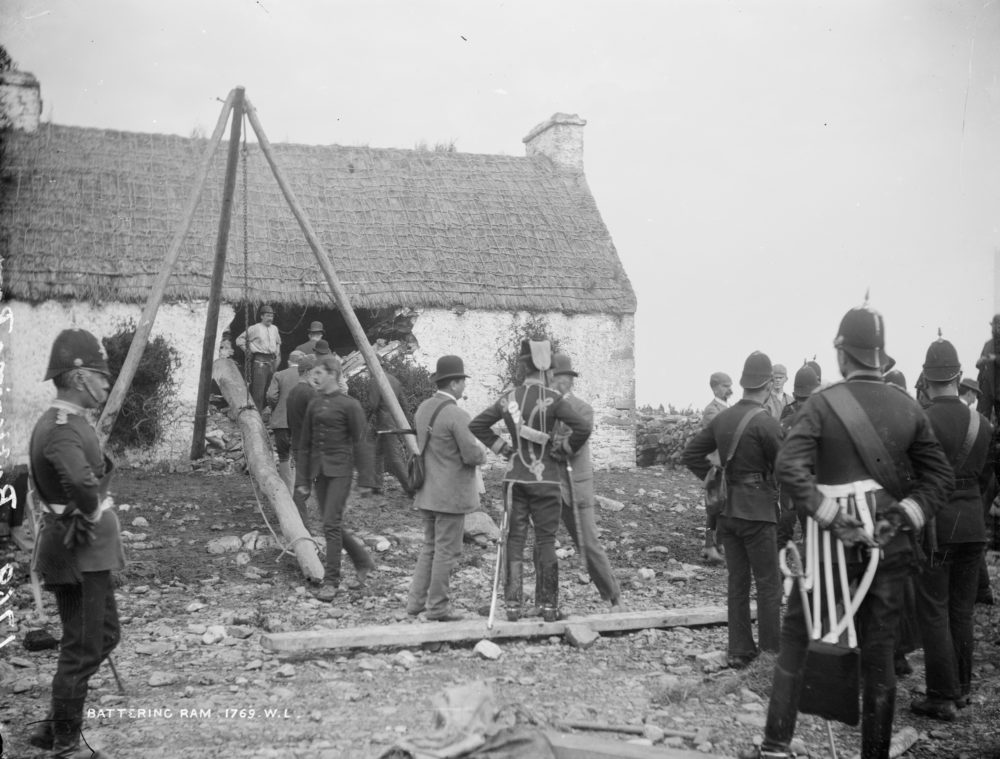
The Vandeleurs: Power Without Mercy
During the Great Hunger, the Vandeleur family held absolute power over West Clare. From Kilrush House, they controlled more than 20,000 acres – deciding who could stay and who would be evicted.
As High Sheriffs, Magistrates and Justices of the Peace, they enforced their own evictions with armed support from the Royal Irish Constabulary.
As Poor Law Guardians, they oversaw the Kilrush Workhouse, where hundreds died just down the road from their walled garden. And as Members of Parliament, they defended this system built on eviction and silence.
In Kilrush, they didn’t just own the land – they owned the law, the workhouse, and the politics. And they used that power to evict thousands into hunger, homelessness, and death.
“The scenes of destitution, disease, and death in the Kilrush Union exceed anything which I have ever seen or read of.”
– Captain Kennedy, Poor Law Inspector, 1847
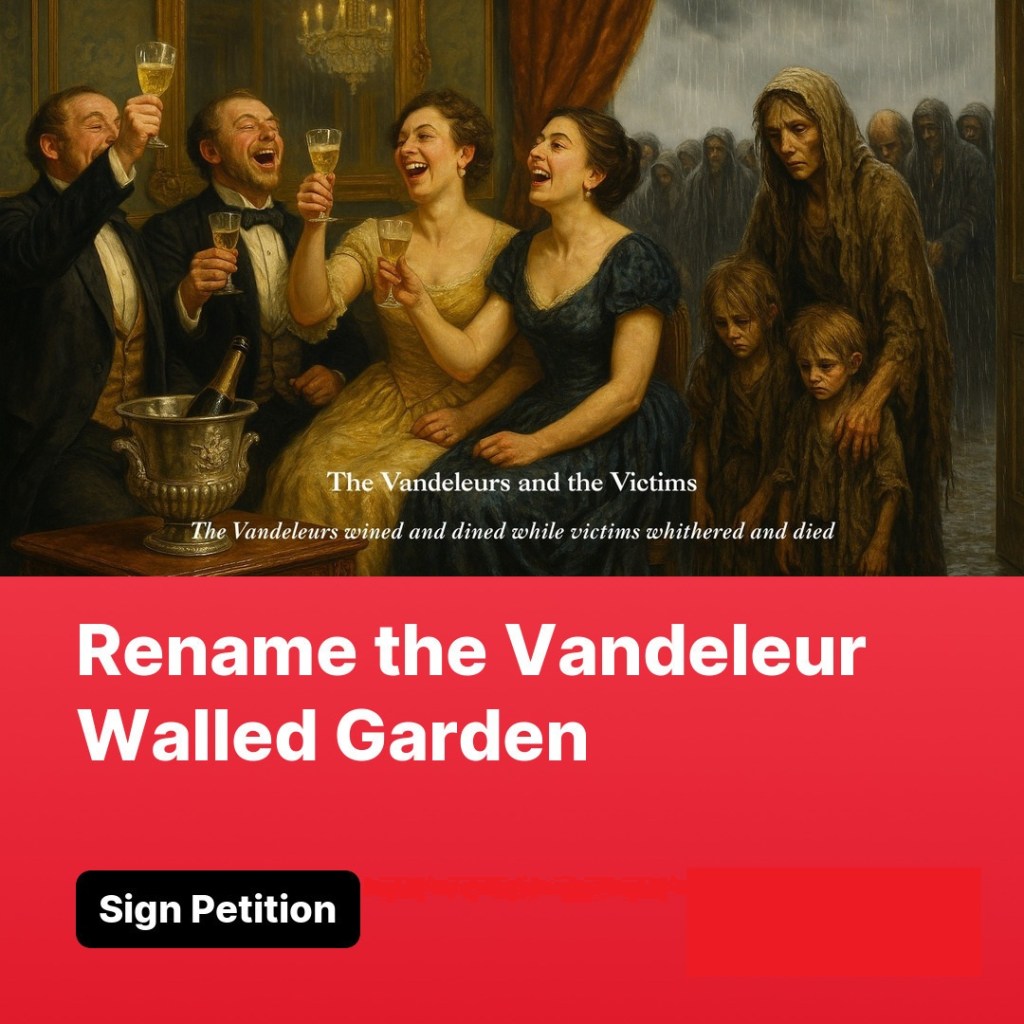
The Vandeleur name still hangs over a public garden in Kilrush—while their victims lie in mass graves, their names lost and forgotten.
We call for a new name and a permanent memorial to those who suffered and died under Vandeleur control during the Great Hunger.
Add your name. Speak for the silenced.
 Justice for the Famine Victims Committee